The Texts
The Nag Hammadi Hermetica

In December 1945 a jar of thirteen Coptic codices surfaced near Nag Hammadi in Upper Egypt. Codex VI contains three Hermetic works — including the previously unknown Discourse on the Eighth and Ninth, the strongest ancient evidence that Hermetists actually practiced ritual, not just doctrine.
In December 1945, near Nag Hammadi in Upper Egypt, a jar came out of the ground holding thirteen papyrus codices in Coptic, copied in the 4th century CE. The find is famous for its “Gnostic gospels” — but Codex VI also carried three Hermetic works, and for the study of Hermetism those few pages were a small revolution.
What’s inside
Three texts, copied together. First, the Discourse on the Eighth and the Ninth (NHC VI,6) — previously unknown anywhere. In it Hermes guides an unnamed initiate through prayer, hymnody and embrace into a visionary ascent to the eighth and ninth spheres, the levels beyond the seven planets, ending in silent vision and an instruction to inscribe the book on turquoise steles in hieroglyphs. Second, the Prayer of Thanksgiving (NHC VI,7) — a short liturgy already known in Greek (a magical papyrus) and in Latin (the end of the Asclepius): the same prayer in three languages, followed in the codex by a note of a ritual embrace and a shared meal. Third, a Coptic excerpt of the Perfect Discourse — Asclepius 21–29 — which lets scholars check the free Latin adaptation against something closer to the lost Greek.
Why the find mattered
Before 1945, the dominant scholarly view (Festugière’s) held that the Hermetica were Greek popular philosophy in Egyptian costume — literary exercises, no real practice, no real Egypt. Hermetic texts copied in Egypt, in Coptic, bound with ritual instructions, made that model hard to sustain. From Mahé’s studies of the 1970s–80s through Fowden to Christian Bull’s 2018 monograph, the pendulum has swung toward real Egyptian priestly milieus behind the tradition of Hermes Trismegistus — the world of Roman Egypt taken seriously at last. The ascent to the Eighth and Ninth also gives flesh to what the Corpus Hermeticum describes doctrinally: the soul’s climb past the planets toward nous and God. Whether NHC VI,6 is a script for a performed initiation (Mahé, Bull) or a literary representation of one is still debated — but it is the strongest single piece of evidence for practiced Hermetic ritual we possess.
How to read it
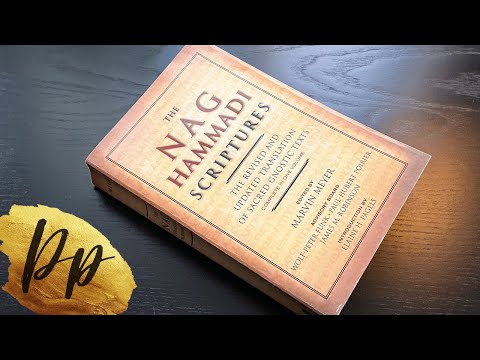
The Hermetic texts of Codex VI are available in scholarly translation in the standard Nag Hammadi collections (e.g. The Nag Hammadi Library in English and its successors), and are discussed at length in Bull’s The Tradition of Hermes Trismegistus (Brill, 2018). One caution: these are not “Gnostic gospels.” The Hermetica are a distinct tradition — no Christ, no evil demiurge — that happened to travel in the same jar.
| Found | December 1945, near Nag Hammadi, Upper Egypt |
|---|---|
| Where | Codex VI of the thirteen Nag Hammadi codices |
| Contents | Discourse on the Eighth and Ninth (VI,6) · Prayer of Thanksgiving (VI,7) · Asclepius 21–29 in Coptic (VI,8) |
| Copies | Coptic, 4th century CE; Greek originals c. 2nd–3rd century CE |
| Unique witness | The Prayer of Thanksgiving survives in Greek, Coptic and Latin — evidence of circulating Hermetic liturgy |
| Impact | Re-opened the Egyptian-context question (Mahé, Fowden, Bull vs. Festugière) |
Fair questions
Are the Nag Hammadi Hermetica Gnostic texts?
No. They were found in the same codex as Gnostic works, but scholars treat the Hermetica as a distinct tradition — there is no Christ and no evil demiurge of the Sethian type. Why the two travelled together is itself an unresolved question.
Is this proof that Hermetists practiced actual rituals?
It is the strongest ancient evidence we have: guided ascent with prayers and hymns, a ritual embrace, a shared meal. Whether the Discourse is a script for a performed initiation or a literary representation of one is still debated — the 'initiation certificate' reading in some popular accounts overstates the text.
What are the Eighth and the Ninth?
The levels beyond the seven planetary spheres in the Hermetic cosmos: the eighth (Ogdoad) is the sphere of the fixed stars, the ninth (Ennead) the divine realm beyond — the destination of the soul's ascent described doctrinally in Corpus Hermeticum I.
Listen & watch
Sources & further reading
- Christian H. Bull, The Tradition of Hermes Trismegistus (Brill, 2018).
- Gnosis: Journal of Gnostic Studies 6.1 (2021) on NHC VI,6–8.
- Research dossiers: ancient-texts.md §5; ideas-glossary.md §8; scholarship.md.
- J.M. Robinson (ed.), The Nag Hammadi Library, scan at the Internet Archive.