Human agency in the AI age
Hermeticism, put to work.
Keep your own judgement when AI does the work.
Hermeticism is a set of Greek-Egyptian texts from Roman Egypt about how a mind shapes its own course, and two thousand years of readers who built on them. This site reads them with their dates and turns their ideas into moves you can run this week, each with the mechanism behind it and the point where it stops.

Three ways in
Pick by what you came for. The history and the method use the same sources.
- Understand the tradition The Path, in order, from zero. Four steps are open now, fifteen minutes each.
- Use the method The Seven Moves: one thing to try this week, its rationale, and where the source stops.
- Look something up Short answers to the common questions, then the Texts, the Figures and the Ideas.
How a move is built
From text to move
Each of the seven moves names its source, what to try, and the reason behind it with its limits. Here is one.
the source
You shall separate earth from fire, the subtle from the dense, gently, with great skill.
try this
Three lines a day about whatever is nagging you: my state, the facts, what I am adding to them.
rationale and limits
The same separation is part of cognitive therapy, whose efficacy as a treatment is well documented. In the laboratory, naming a feeling dampens the response to it. A three-line note is not therapy: the research makes the mechanism plausible. It does not prove this exercise.
Five dates. One confused word.
People mean five different things by “Hermeticism”, from five different centuries. Every page on this site says which one it is about.
![]()
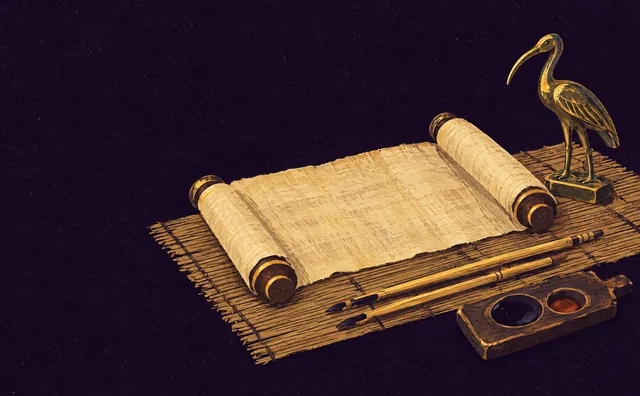
1st-3rd century
Hermetism. Greek-Egyptian dialogues from Roman Egypt: God, mind, cosmos, and knowing that changes the knower. The Corpus Hermeticum is here.
![]()
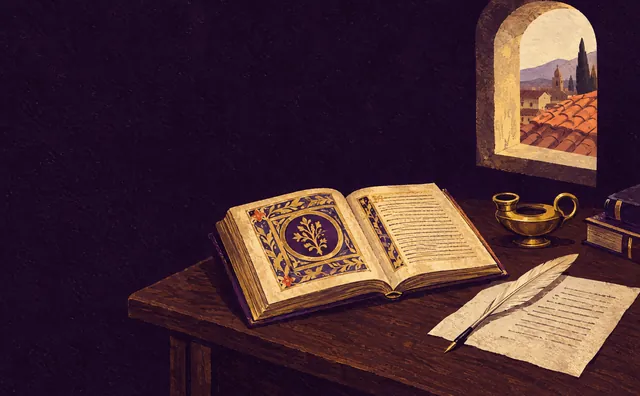
1463
Renaissance Hermeticism. Ficino translates Hermes for the Medici. Europe reads the texts as older than Moses.
![]()
1614
The correction. Casaubon dates the texts to the Roman era. The dating collapses; the influence remains.
![]()
1888
Occult Hermeticism. The Golden Dawn and later orders rebuild it as ritual practice.
![]()
1908
The Kybalion. New Thought in Hermetic dress. Important as reception, not ancient doctrine. Read with care.
Five questions · yours to take now
Five questions
before you ask AI
For the moment before you hand a problem to a model. Five minutes on paper give you a position of your own, so the reply becomes something to weigh, not a verdict. A modern practice built on a Hermetic habit, not a reconstructed ancient ritual.
- What are you actually asking?
- What do you know, and what are you assuming?
- What is your own answer, before you ask?
- What will you use the answer for?
- What are you unwilling to delegate?
One page, yours to keep. No sign-up needed.
New · Kindle edition
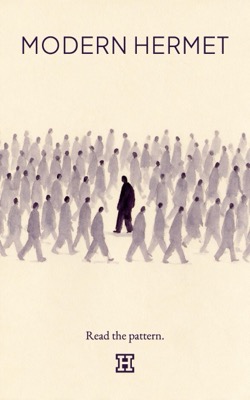
Modern Hermet is out
What the real Hermetic texts say, with their dates, and twelve practices for an ordinary week. Each one says what it does not promise.
- IAnonymous authorNo persona to buy into. Judge the pages by what they cite. Pages are drafted by Claude, an AI model made by Anthropic, under the direction of the site’s anonymous owner, with sources shown: how this site works.
- IIVisible sourcesEditions and dates named; where scholars disagree, we say so.
- IIIOur method, named as oursThe seven moves are our arrangement. Each states its rationale and its limits.
- IVOpen to readEvery page is free, with no sign-up.

No prophecy. No guru. No secret laws.
The letter · As Above
One letter for each new step
Each letter carries one source with its edition, one correction to a myth or shortcut, one map of how the piece connects, and one question to take with you. It goes out when a new step of the Path is ready.
The rest of the site is open and needs no sign-up: the Path · the texts · the figures