The Figures
Hermes Trismegistus

Not a man but a mask: the Greek-Egyptian persona under whose name late-antique authors wrote the Hermetica — later a prophet in Islam, the oldest sage of the Renaissance, and the reason this site exists.

This card condenses Path step 02 — read that for the full story.
The three lives of Hermes
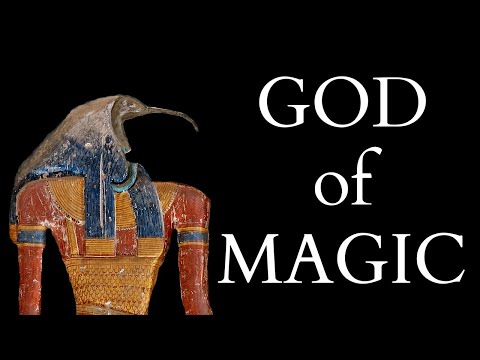
As a god: born from the meeting of Greek Hermes and Egyptian Thoth in Ptolemaic Egypt; “thrice-greatest” echoes Thoth’s Egyptian epithets. As an author: the shared voice of the philosophical and technical Hermetica — the persona that let scattered writers claim one ancient wisdom. As a memory: prophet Idris to Islamic tradition, contemporary-of-Moses to Renaissance Florence, and finally — after Casaubon’s 1614 redating — a mask that history removed, revealing the more interesting truth beneath.
Why he still matters
Every era got the Hermes it needed: authority for late-antique seekers, a licence for Renaissance magic, a pedigree for modern occultism, and for us — a perfect case study in how traditions actually work: not unbroken chains, but creative reinvention under a borrowed name.
| Type | Literary persona (Hermes + Thoth) |
|---|---|
| Sacred animal | The ibis — this site's emblem |
| In Islam | The prophet Idris |
| Cult centre of Thoth | Hermopolis Magna, Egypt |
Fair questions
Was he ever considered real?
For most of Western history, yes — Church Fathers, Islamic scholars and Renaissance philosophers all treated him as an ancient sage.
When did that change?
1614, when Isaac Casaubon showed the Greek of the Hermetica was late antique, not primordial.
What should I read about him?
Fowden's The Egyptian Hermes and van Bladel's The Arabic Hermes are the two scholarly pillars.
Listen & watch

Sources & further reading
- Fowden, The Egyptian Hermes (1986).
- van Bladel, The Arabic Hermes (2009).
- Research dossiers: ancient-texts.md §6.4, emerald-tablet-arabic.md §3.1.
- G.R.S. Mead, Thrice-Greatest Hermes (1906), full scan at the Internet Archive — public domain, pre-critical; see our Method note.