Technology
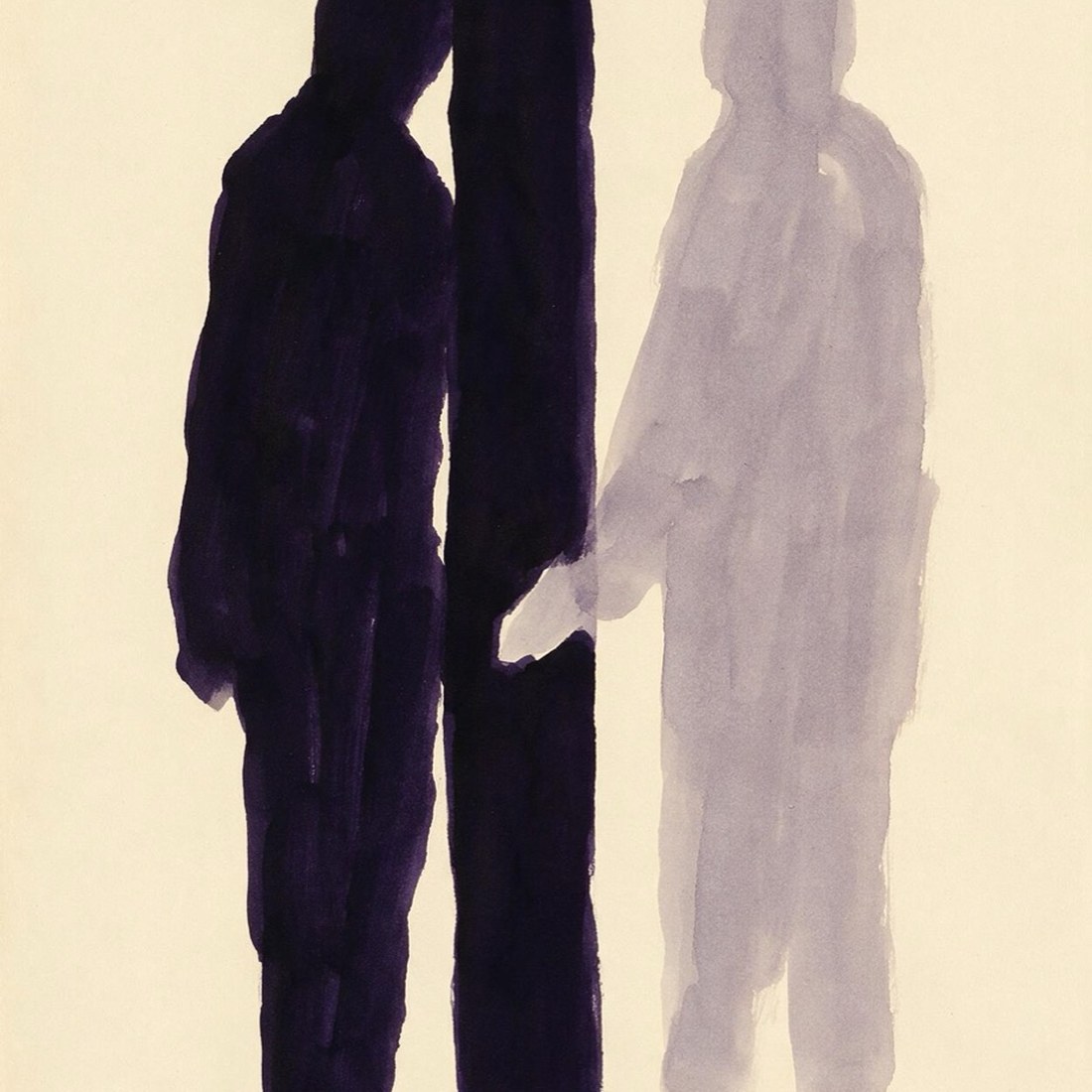
Not about how much you use. About whose intention the thing you use is carrying out.
Open chapter
This is chapter 8 of Modern Hermet, open in full. The rest of the book stays in the book, on Amazon Kindle.
Opening signal
Picture a scene; it is a composite, not a report. You ask an assistant which of two offers to send a client. It answers in four tidy paragraphs, recommends the second, and you send it. The reasoning read well. A week later you could not say which part of it you checked, or whether the client’s last email, the one that changes the picture, was ever in front of it.
We usually call this laziness. That is a comfortable explanation, and an incomplete one. On the other side there is a system built to sound sure, and on this side a well-documented human tendency to accept a confident prompt. This is not only a contest of willpower. It is an asymmetry.
Two camps have formed in answer to that asymmetry, and both have already lost. The enthusiasts: everything new is good, and any question about cost sounds like fear of the future. The catastrophists: switch it off, cut it out, a flip phone, the detox as a virtue. The first give away their agency by running, the second by fleeing. The result is the same: you are not the one deciding.
This chapter stands in a third, less striking place. The modern hermet is not anti-technological. He is anti-capture. He does not ask whether a tool is good or bad, because that question has no answer. He asks something that can be checked: whose intention is this tool carrying out just now?
The question became urgent when the tools began speaking in full sentences: the capture of attention is uncomfortable, the capture of judgement is another category.
Source
Honestly: the hermetic texts do not speak of technology, because they had none in our sense. They do have one figure that strikes the subject with unsettling precision. In the Asclepius, men who cannot create a soul create a dwelling for one: they make statues and draw power down into them, so that the object begins to act. For centuries this was read as a description of magic. The text survives mainly in a Latin version from late antiquity, and Coptic fragments from Nag Hammadi confirm its earlier circulation. Beside it stands the so-called Lament, a prophecy of an Egypt its gods are leaving: the temple remains, the spirit departs from it.
The contemporary basis is different but convergent. Persuasive design is a documented discipline: B.J. Fogg ran a captology laboratory at Stanford from the nineteen-nineties, and the mechanics of variable reward have been known since Skinner. On the side of decision there is automation bias: Parasuraman and Riley (1997) and Skitka and colleagues (1999) showed that people using automated prompts miss what the system did not flag, and carry out what it flagged wrongly, even with contradictory data to hand. This research does not say what not to use. It says that trust in a tool grows faster than the tool’s accuracy.
Our reading
Capture has an operational definition: it is the moment at which a tool stops carrying out your intention and begins carrying out somebody else’s (with your hands, your time and your attention) while the full impression that you are still the one deciding remains intact.
In its own setting the passage about statues is about ritual. We read it, on our own account, as an early image of an artefact with an intention built into it: a thing into which somebody has put a will, and which goes on carrying that will out by itself long after its maker has left the vicinity. That is precisely software. Somebody’s criteria sit inside every system: sealed into a success metric, into a default setting, into what is one click away and what is seven. Hence the fastest test of correspondence we know: what is in the business model upstairs shows up in your evening downstairs. If you want to know what a tool is for, check what its makers are paid for.
With AI it is the same, only the stake is higher. AI is not an oracle, an authority or a source of identity. It is an amplifier. It amplifies what it is given at the input: a clear intention it turns into leverage, and unease and indecision into a very eloquent amplification of confusion.
So the question of this decade is not “what can AI do”, but: what is worth doing with it, and what is to remain human? This is not about moderation: you can spend ten hours in a tool as its author and twenty minutes in it as its material. Nor is it about distrust: a model is sometimes a better thinking partner than most of the day’s conversations. It is about direction only.
The advantage does not belong to whoever generates the most. It belongs to whoever knows what is worth generating.
Someone who tried this
John Dee owned one of the largest libraries in England, advised a queen on navigation and calendars, and was one of the best-equipped minds of his century. He also could not see or hear the angels he wanted to consult. So he hired someone who said he could.
From 1582 Edward Kelley sat at the crystal and reported. Dee wrote down what Kelley said, for years, in enormous detail. He was not a fool: he tested, cross-examined, kept records. But the entire channel ran through one man whose interests were not Dee’s, and Dee had no independent way to check a single word of it.
It ended with Kelley relaying an instruction that the two men should share their wives. Dee complied. The partnership broke up soon after.
This is the chapter’s question in its sharpest form. What are you willing to receive through a channel you cannot audit?
Operational translation
The concrete work begins where you have to settle what may be delegated. Three layers, and a hard rule that only the first two are passable.
Execution. Delegate without remorse. Rewriting, ordering, first drafts, summaries of two hundred pages, searching your own notes, the scaffolding of code, ten variants to be thrown away. Handing this work to a machine is not laziness; it is the recovery of the core.
Judgement. Delegate the input, never the output. Ask for arguments against your own thesis, for three framings of a problem, for what you are not seeing. That genuinely makes you cleverer. But the assessment of which framing is true stays on your side, because the model does not answer for consequences. You do. Delegating judgement to something that bears no consequences is a category error, not a matter of preference.
Intention. Here delegation ends. What I want. What is worth it. Whether this project should exist at all. No model will answer those for you, not because it is too weak, but because the substance of the answer is that you arrived at it yourself.
From that division follows a bet about the market ahead. It is a forecast, not a finding. In the world after AI, intelligence itself becomes cheap. Competent text, analysis, code and images can be generated by anyone. What grows expensive is what cannot be generated:
- taste: knowing what is good;
- intention: knowing what for;
- judgement: knowing when;
- energy: the capacity to carry a thing to its end;
- trust: the fact that somebody stakes his own risk on you;
- the ability to choose: the nerve to reject ninety good options for the one right one.
In the working week this means one shift: less producing, more deciding and closing. The change is unpleasant, because producing gives the immediate sense that something is happening, while deciding looks from outside like staring at a wall.
Two rules, small but saving. Do not give away first contact with a problem: before you ask the model, write three sentences of your own about what you think, so that you hold a position against which the answer will be material rather than revelation. And a rule on the horizon of years: if for a year you write no difficult paragraph yourself, you will probably lose less of the ability to write than of the ability to recognise when a paragraph is good. Delegating execution is free. Delegating practice has a deferred price.
The bodily reading is harder here, because a conversation with a model returns no signal at all. There is no tiredness in your interlocutor, no awkward silence, no look that says you are overdoing it: everything has to come from you. Two readings remain. Ten minutes after the session: is your head clearer and do you want to do something, or are you irritable and dull? And in a longer session, stand up once, leave the room and come back: if on returning you cannot remember what you were there for, note it as a sign that the session was leading you.
Practice
The AI charter: a seven-day experiment
This is not a set of regulations and not a declaration of purity. It is a decision written down in advance, so that you need not take it afresh twenty times a day, always in a worse state than now.
Day 1: what I actually use it for. Specific uses, not categories. Not “for writing”, but “for the first draft of proposals, which I rewrite anyway”. Usually five to eight items come out, and that alone can be a discovery, because most people use AI for three things and think they use it for thirty.
Day 2: what AI does not do for me. The heart of the charter. To consider:
- it does not write messages to people I care about;
- it does not take decisions whose consequences I will bear;
- it does not judge whether something is good, at most it says why it might not be;
- it does not fill the silence in which I was going to think.
Your list will be different. What matters is that it be stated: an unstated boundary does not work.
Day 3: the threshold of delegation. One sentence, concrete enough to be checked: “the last twenty per cent of anything under my name I do by hand”. That is my own threshold, a working rule rather than an optimum; yours may differ.
Days 4–7: the test in motion. The charter holds. At every session, three sentences of your own before the question to the model. At the end of the day, one word: author or material, which you were.
Day 7: the exit clause. One question: did this tool strengthen my agency this week, or take it over? If the answer is unclear, take that as a reason to look closer, not as proof either way: write down one concrete moment that points each way. Correct one item of the charter and put it aside for review in a quarter.
The charter does not promise protection from distraction and has nothing to do with the number of hours you spend at a screen; it does one thing: it keeps authorship with you.
Limits and the question
The question of this chapter is: does the person receiving this know who was present? The point is the difference between help in execution and misleading somebody about who gave their time to it. A message of condolence, a letter to a friend, feedback for an employee, an apology: here the value lies in the presence itself; generated, they stop being what they were meant to be, even if they read better. The same question settles two smaller matters. Cost: text is produced today in a second and read at the old speed; four pages that cost you a minute are a transfer of your work onto somebody else’s attention, so shorten in proportion to how cheaply it came to you. And power: automating decisions about people (recruitment, assessment, order of service) carries somebody’s criteria into somebody else’s life, and requires that a person actually answer for the outcome.
The limit on the other side: refusing to use a tool can be a pose rather than a principle. A pose is recognisable by being told (“I don’t use that”, dropped in where nobody asked); by costing nothing, because it concerns things you would not have done anyway; by its price being paid by a colleague who sits three hours over something the tool would have done in ten minutes; and by becoming an identity: whoever has built himself on the rejection of AI must go on rejecting it even when it would be good, or lose not a tool but a figure.
And two limitations of the charter: it does not work against external compulsion (tools an employer requires are a matter for a conversation or a decision about the job, not for a private rule) and it does not replace competence: no declaration protects you from accepting a wrong answer in a field you do not know well enough to spot the error.
Closing formula
There will be no return to a world without these tools, and no sense pretending it is on the table. What remains, then: use a great deal and choose narrowly. Give the machine everything that is execution, and give it nothing that is choice. Keep intention on your side of the table, even when, especially when, the tool is good enough to tempt you to stop.
Because the statue will go on working, whether or not anyone is still in the temple. Your task is not to break it. Your task is to remain inside.
The tool is not the enemy. The enemy is the moment you stop noticing whose intention it is carrying out.
The rest of the book
Technology is one of twelve chapters. Each takes one distinction, reads the Hermetic sources with their dates and ends with one practice for an ordinary week.
Get it on Amazon Kindle edition · 12.99 USD